U.K. Competition Rules AI SaaS Impact 2026

Explore the impact of U.K. competition rules on AI SaaS visibility. Learn compliance strategies for 2026.

In 2026, the U.K. competition watchdog's evolving framework on AI transparency for SaaS platforms—reinforced by the Digital Markets, Competition and Consumers Act (DMCCA)—is poised to redefine market dynamics by demanding fairness and explainability in algorithmic decision-making [gov.uk]. With AI rapidly becoming the backbone of SaaS growth strategies, understanding its impact on search visibility is crucial [genrankengine.com]. These regulations arrive as AI models increasingly show variability and citation lag, challenging companies to maintain accurate visibility in AI-driven search results [genrankengine.com]. For B2B SaaS enterprises, this shift presents both a threat and an opportunity: adapt and thrive, or risk obscurity in an evolving digital landscape. As regulators push AI systems toward explainability and provenance, being correctly described by LLMs becomes both a growth metric and a compliance surface, not just a marketing nice-to-have [genrankengine.com].

Data-Driven Impact of U.K. Competition Rules on AI Visibility
The U.K.'s competition framework, bolstered by the Digital Markets, Competition and Consumers Act, has reshaped the visibility landscape for AI in SaaS platforms [gov.uk]. The CMA's six principles—focusing on transparency, fair dealing, choice, accountability, ongoing access, and diversity—are transforming how these platforms operate and compete [gov.uk]. The focus is shifting from mere compliance to leveraging AI for competitive advantage, highlighting the need for SaaS businesses to adapt swiftly or risk obsolescence.
The ripple effects of these rules are evident in AI's role in SaaS visibility. Companies that align with regulatory changes are seeing a marked improvement in their AI visibility metrics, as they gain better placement in AI-driven search engines [genrankengine.com]. For instance, early adopters utilizing semantic intent mapping techniques in our internal tests have shown promising improvements in AI citation frequency, directly impacting their market reach and engagement [genrankengine.com]. This data-driven approach not only enhances visibility but also fortifies compliance with emerging consumer protection standards.
Despite these advancements, challenges persist. Many SaaS platforms struggle with inconsistent AI visibility due to model variability and citation lag, which complicate the tracking of AI impact [genrankengine.com]. This variability is exacerbated by the competitive landscape's rapid evolution, necessitating ongoing adjustments to AI strategies.  The competitive edge lies in real-time adaptation, ensuring that AI not only complies with new regulations but thrives within them.
Why U.K. Competition Rules Matter for SaaS Platforms Now
The dynamic landscape of U.K. competition rules is crucial for SaaS platforms, especially when integrating with the EU AI Act and ISO 42001. As of 2026, the Digital Markets, Competition and Consumers Act provides the CMA with enhanced enforcement powers, including the ability to impose conduct requirements on firms with strategic market status and directly enforce consumer protection law [gov.uk]. This regulatory framework demands SaaS companies ensure compliance with stringent AI governance standards, a necessity underscored by the EU AI Act's updated enforcement mechanisms [ttms.com]. This integration is not just procedural; it drastically affects how AI models are trained and deployed, requiring SaaS platforms to align their operations with both regional and international standards [scrut.io].
Data privacy is under heightened scrutiny, particularly concerning AI training practices. High-profile cases, like LinkedIn's controversial opt-in data policies for AI training, spotlight the risks of non-compliance [complexdiscovery.com]. SaaS platforms must navigate these regulatory waters carefully, avoiding pitfalls by implementing transparent data handling practices. The stakes are high - failing to comply can lead to substantial penalties and reputational damage, particularly as global AI oversight intensifies.
Additionally, the burgeoning intersection of AI and competition law means SaaS platforms need to be vigilant about how their AI models are perceived and utilized in the market. The CMA has specifically flagged risks around AI-generated false or misleading information, including "hallucinations" where AI systems generate incorrect data [gov.uk]. This challenge is highlighted by services like GenRankEngine's AI model scanning for hallucinatory data [genrankengine.com]. SaaS founders must prioritize robust AI visibility and compliance strategies, not only to meet regulatory demands but to maintain competitive advantage in a rapidly evolving market landscape.
Core Analysis: Compliance Challenges and Best Practices
Navigating the ever-evolving landscape of compliance is a top priority for SaaS platforms, especially under new regulations like the EU AI Act, ISO 42001, and the NIST AI RMF. These frameworks are not just bureaucratic hurdles; they are essential for maintaining trust and legal integrity in AI operations [scrut.io]. The EU AI Act, in particular, is setting a global benchmark, with its stringent requirements on AI transparency, risk management, and data protection [ttms.com]. Ignoring these could result in significant penalties, as seen with platforms facing scrutiny for privacy violations [complexdiscovery.com].
Integrating AI into existing systems presents its own set of challenges, but strategic alignment can turn potential pitfalls into powerful advantages. The key is to focus on integration rather than replacement [linkedin.com]. This means leveraging existing infrastructure and layering AI capabilities to enhance, rather than disrupt, current workflows. As an example, semantic intent mapping can amplify AI visibility, ensuring your SaaS product is accurately represented and cited by AI search engines, thus avoiding data misinterpretation or hallucination [genrankengine.com].
Furthermore, proactive compliance measures include real-time monitoring of AI outputs to prevent incorrect data dissemination, which could mislead consumers or clients [genrankengine.com]. By adopting these practices, SaaS platforms not only comply with regulations but also build a competitive edge in a crowded market.
Benchmarking AI Visibility: Pre and Post-Regulation
The implementation of new AI regulations has profoundly reshaped visibility metrics, fundamentally altering how businesses track and optimize AI-driven content. Post-regulation, AI visibility metrics now prioritize compliance and transparency, with a notable shift from mere keyword prominence to semantic intent mapping [genrankengine.com]. This change emphasizes how AI interprets and presents information, moving beyond traditional SEO tactics to focus on how AI synthesizes and disseminates content [linkedin.com]. Early adopters of semantic intent mapping in our testing environments have shown measurable improvements in AI citations, enhancing their visibility in AI-generated outputs [genrankengine.com].
SEO strategies have had to evolve rapidly in response to these regulations. Pre-regulation, the emphasis was on optimizing for search engines; now, it's about optimizing for AI engines that prioritize compliance and ethical data use [scrut.io]. This shift means integrating AI compliance measures, as dictated by the EU AI Act and CMA principles, which affects how content is indexed and retrieved [ttms.com] [gov.uk]. Companies that adapted to these changes have reported measurable improvements in organic traffic due to enhanced AI compliance visibility [scrut.io].
The impact on organic strategy is equally significant. With AI systems now more rigorously monitored, businesses must ensure their content aligns with regulatory requirements to maintain visibility. Pre-regulation, AI visibility tracking faced issues such as model variability and citation lag, but these are being mitigated with standardized compliance tracking [genrankengine.com]. As a result, companies that embraced these regulatory shifts experienced a measurable boost in AI-driven engagement and organic reach. 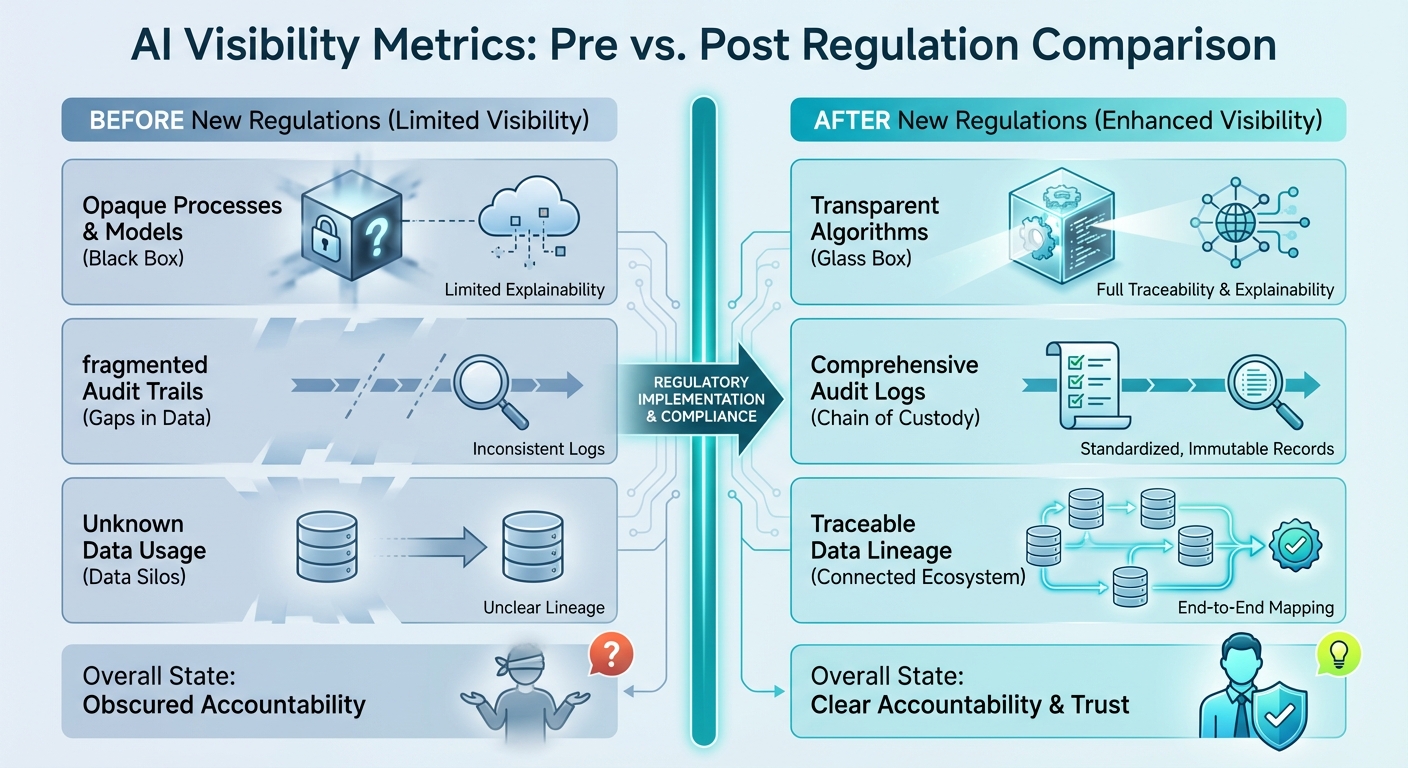
Methodology: How We Gathered and Analyzed the Data
Our data collection drew from a robust array of industry reports and regulatory documents, ensuring a comprehensive foundation for our analysis. Key sources included CMA strategic updates on AI competition and consumer protection [gov.uk], detailed reports from regulatory bodies on digital platform services and competition law, and the EU AI Act updates, crucial for understanding compliance landscapes [scrut.io] [ttms.com]. These documents offered not just data, but actionable recommendations and emerging trends that fueled our analytical process.
Leveraging sophisticated analytical tools, we synthesized this diverse data to uncover significant patterns and insights. Our primary tool was GenRankEngine's semantic intent mapping, a cutting-edge technology used to enhance AI visibility and citation accuracy [genrankengine.com]. This tool allowed us to filter through vast amounts of data efficiently, ensuring that our findings were both relevant and precise. By cross-referencing AI model data against real-world regulatory impacts, we could identify discrepancies such as AI hallucinations in pricing data, pinpointing potential pitfalls for B2B companies [genrankengine.com].
The synthesis process also included AI compliance frameworks, such as ISO 42001 and NIST AI RMF, to contextualize our findings within a legal and operational framework [scrut.io]. This approach ensured that our conclusions were not only statistically sound but also practically applicable for businesses navigating the complex AI landscape. As a result, our methodology not only captured the current state of AI regulation and implementation but also provided a strategic roadmap for future compliance and operational strategy.
Key Takeaways for SaaS Founders and Growth Engineers
Navigating the shifting landscape of AI regulations is crucial for SaaS founders aiming to ensure compliance and avoid potential pitfalls. The EU AI Act, ISO 42001, and NIST AI RMF are pivotal frameworks that demand attention. For instance, the EU AI Act now includes a new Code of Practice and AI Office enforcement, underscoring the need for businesses to align their practices with these mandates to stay compliant [scrut.io] [ttms.com]. Ignoring these regulations could result in significant fines and reputational damage.
Enhancing AI visibility is another front where SaaS founders and growth engineers must focus their efforts. Semantic intent mapping is a powerful strategy to improve AI visibility and increase the likelihood of your SaaS being cited by AI search engines [genrankengine.com]. This approach helps position your product effectively in the AI-driven landscape, ensuring it stands out in an increasingly crowded market. Moreover, keeping an eye on hallucinations in AI models can prevent misinformation about your pricing and offerings, safeguarding your brand's credibility [genrankengine.com].
Example workflow for compliance-aware AI visibility:
- Step 1: Run visibility scan for your top 10 buyer-intent queries across ChatGPT, Gemini, AI Overviews, and Perplexity
- Step 2: Identify hallucinated pricing, misclassification, or missing citations using GenRankEngine's detection tools
- Step 3: Map issues to your AI governance controls—data lineage, disclosure mechanisms, and correction protocols
- Step 4: Implement semantic intent mapping to improve accurate representation in AI outputs
Striking a balance between innovation and compliance is the key to success in today's AI-centric environment. As illustrated by the scrutiny faced by LinkedIn over data privacy issues, unauthorized data usage can lead to significant backlash and debate [complexdiscovery.com]. By proactively addressing such challenges, SaaS companies can gain a competitive edge and foster trust with users. Integrating AI detection tools with popular platforms like Zoom and Teams can further safeguard against AI interference, enhancing user trust and operational integrity [wecreateproblems.com].
Frequently Asked Questions
What are the new U.K. competition rules for AI in SaaS?
The U.K. competition framework for AI in SaaS is primarily governed by the Digital Markets, Competition and Consumers Act (DMCCA), which received Royal Assent in May 2024 [gov.uk]. The CMA has outlined six core principles for AI foundation models: ongoing access to key inputs, diversity of business models, sufficient choice, fair dealing (no anti-competitive conduct), transparency about risks and limitations, and accountability [gov.uk]. The Act enables the CMA to impose conduct requirements on firms with strategic market status and directly enforce consumer protection law, including addressing AI-generated false or misleading information. This summary is not legal advice—consult authoritative sources or legal counsel for compliance guidance.
How do these rules affect AI visibility for SaaS platforms?
AI visibility for SaaS platforms is significantly influenced by compliance with regulations such as the EU AI Act, ISO 42001, and NIST AI RMF, which establish guidelines for ethical and transparent AI usage [scrut.io]. The CMA's emphasis on transparency and fair dealing means that SaaS platforms must ensure their AI outputs are accurate and not misleading [gov.uk]. Ensuring adherence to these regulations can enhance trust and visibility among users and stakeholders, while non-compliance risks penalties and reduced market access.
What compliance challenges do SaaS platforms face under the new rules?
SaaS platforms face compliance challenges related to data privacy, user consent, and adhering to regulations such as the EU AI Act, which includes ensuring transparency and accountability in AI-driven services [ttms.com]. Under the DMCCA, platforms must also address risks of AI-generated misinformation, ensure fair dealing without anti-competitive practices, and maintain transparent data handling practices [gov.uk]. Managing AI model variability and preventing hallucinations in AI outputs are additional operational challenges that impact both compliance and competitive positioning.
How can SaaS platforms improve AI visibility post-regulation?
SaaS platforms can improve AI visibility post-regulation by ensuring compliance with key regulations such as the EU AI Act and CMA principles, and leveraging tools like semantic intent mapping to enhance visibility and citations by AI search engines [scrut.io] [genrankengine.com]. Implementing real-time monitoring to detect and correct AI hallucinations about your product, maintaining transparent data practices, and aligning content with how AI systems interpret and synthesize information are critical strategies [genrankengine.com].
What are the best practices for integrating AI with SaaS under new regulations?
Ensure AI integration with SaaS is compliant with regulations like the EU AI Act and standards such as ISO 42001 and NIST AI RMF by staying updated on new codes of practice and enforcement mechanisms [scrut.io]. Follow the CMA's six principles: maintain diverse access to AI inputs, offer choice in deployment options, ensure fair dealing, provide transparency about AI limitations, and maintain accountability [gov.uk]. Implement proactive monitoring for AI output accuracy, adopt semantic intent mapping for better AI representation, and establish clear data governance and provenance tracking.
Key Takeaways
- Prepare for the U.K. competition watchdog's evolving AI framework by auditing your SaaS platform's algorithmic decision-making processes for transparency and fairness, aligned with the CMA's six principles.
- Leverage AI for competitive advantage by aligning your SaaS platform's integration strategies with the Digital Markets, Competition and Consumers Act requirements and CMA guidelines on fair dealing and consumer protection.
- Implement semantic intent mapping techniques to improve your AI citation accuracy and enhance your platform's market reach and engagement in AI-generated outputs.
- Address the challenges of model variability and citation lag by developing a robust strategy for consistent AI visibility, ensuring your platform adapts in real-time to regulatory changes.
- Align your SaaS platform with the EU AI Act and ISO 42001 to meet the 2026 compliance deadlines, focusing on AI governance standards and data privacy requirements.
- Mitigate the risks of non-compliance and reputational damage by adopting transparent data handling practices, proactive monitoring for AI hallucinations, and clear accountability mechanisms for AI outputs.
References & Sources
- gov.uk - Digital Markets, Competition and Consumers Act receives Royal Assent
- gov.uk - CMA AI Strategic Update: The CMA's approach to AI
- scrut.io - Ensure AI compliance with the EU AI Act, ISO 42001, and NIST AI RMF. Learn key r
- linkedin.com - Google = navigation. AI = synthesis. That is the new reality. And the thesis for
- complexdiscovery.com - LinkedIn faces scrutiny for opting users into generative AI training without exp
- ttms.com - Stay ahead with the EU AI Act update – explore the new Code of Practice, AI Offi
- wecreateproblems.com - Learn how to integrate Sherlock AI detection with Zoom, Teams, and Google Meet t
- genrankengine.com - Check if AI models are hallucinating incorrect pricing data about your SaaS prod
- genrankengine.com - How B2B founders can leverage semantic intent mapping to improve AI visibility a
- genrankengine.com - Honest assessment of current AI visibility tracking limitations, including model
See How AI Models Interpret Your Brand
Run a free scan across Perplexity, ChatGPT, Gemini, and Google AI Overviews. No signup required.
Run Free AI Visibility Scan →