AI Visibility Strategies: Google vs. ChatGPT 2026

Explore AI visibility strategies with Google AI Overviews and ChatGPT recommendations for enhanced brand visibility.

In the dynamic landscape of AI-driven brand visibility, a staggering 62% of the time, Google AI Overviews and ChatGPT recommend different brands [searchenginejournal.com]. This divergence underscores a crucial question: where should businesses focus their efforts to ensure optimal visibility? Google prioritizes authority and structure [imageworkscreative.com], while ChatGPT acts more like a brand recommender, emphasizing mentions and credible sources [brightedge.com]. This disparity is further highlighted by the fact that ChatGPT's responses are significantly longer, averaging 1,686 characters compared to Google AI Overviews’ 997 [usebear.ai]. For brands aiming to harness these platforms effectively, understanding each model's unique approach is imperative. GenRankEngine's research reveals strategies to navigate these differences and improve AI recommendations [genrankengine.com]. Ignore these insights at your peril.

AI Visibility Trends: A Data-Driven Hook
A stark 62% variance exists between brand recommendations made by Google AI and ChatGPT, as revealed by BrightEdge research [searchenginejournal.com]. This discrepancy highlights the divergent algorithms and priorities these platforms utilize. Google AI prioritizes citations and authoritative sources in its overviews, whereas ChatGPT operates more as a conversational brand recommender, often with less sourcing [brightedge.com]. Understanding these differences is crucial for brands aiming to optimize their visibility across AI-driven platforms.
Character count also plays a significant role in the visibility game. Google AI Overviews average 997 characters, offering concise, structured responses [usebear.ai]. In contrast, ChatGPT's responses are more verbose, averaging 1,686 characters, allowing for richer, more detailed narratives [usebear.ai]. This distinction can influence how a brand's message is communicated and perceived, impacting engagement and recall. 
The challenge for brands is clear: adapting to these varied AI environments requires strategic content development tailored to each platform's unique algorithmic focus. GenRankEngine's methodologies provide actionable insights for enhancing visibility in Google AI Overviews, a critical step for brands looking to maintain a competitive edge [genrankengine.com]. As AI continues to evolve, so must our strategies to ensure consistent and effective brand representation.
The Current Landscape of AI Visibility
Understanding AI visibility is paramount in today’s digital marketing landscape because traditional SERPs no longer encapsulate a brand's full presence. In fact, a striking 62% of the time, AI models like Google AI Overviews and ChatGPT recommend different brands than traditional search results do [searchenginejournal.com]. This divergence highlights the need for marketers to focus on AI visibility as much as, if not more than, traditional SEO strategies.
Different AI models have distinct recommendation patterns, which can significantly influence marketing strategies. For example, ChatGPT functions more like a brand recommender with minimal sourcing, whereas Google’s AI emphasizes citations with broad coverage [brightedge.com]. This discrepancy means that what works for visibility on one platform may not translate directly to another. A brand must tailor its content strategy to align with the specific characteristics of each AI platform.
AI visibility is not a stable metric and varies across different models. Continuous tracking is essential, as demonstrated by GenRankEngine’s analysis, which provides insights into which competitors are being recommended by AI models instead of your brand [genrankengine.com]. This dynamic visibility landscape requires marketers to be agile, adapting strategies to maintain and enhance their brand’s presence across AI platforms. Tools like those discussed in GenRankEngine’s case studies can offer the methodology needed to feature in AI recommendations [genrankengine.com], ensuring your brand remains competitive in this evolving digital era.
Comparative Analysis: Google AI vs. ChatGPT
Google AI's brand visibility strategy is anchored in its emphasis on authority and structured information, with a strong focus on citations. This approach ensures that content appearing in Google AI Overviews is well-documented and credible, aiming to provide users with a sense of reliability and comprehensive coverage [imageworkscreative.com]. The structured nature of Google AI's outputs typically results in shorter content - averaging 997 characters - compared to its competitors [usebear.ai]. Brands seeking to enhance visibility in Google AI environments must prioritize citation-rich content to align with Google's citation-first methodology [genrankengine.com].
In contrast, ChatGPT positions itself as a dynamic brand recommender, prioritizing mentions and leveraging credible sources to bolster its recommendations [brightedge.com]. This model operates with less emphasis on explicit sourcing and instead focuses on highlighting brands through longer, more narrative-driven responses, averaging 1,686 characters [usebear.ai]. This approach makes ChatGPT a powerful tool for brands looking to be featured as top-of-mind solutions, even if they lack extensive citation networks. The model's brand recommendations differ from Google's nearly 62% of the time, reflecting its distinct algorithmic preference for emerging brands and diverse industries [searchenginejournal.com].
The divergence in these strategies illustrates a critical decision point for brands: whether to invest in structured citation strategies or leverage narrative-based mentions. As visibility in AI models is not consistent across platforms, brands must tailor their strategies accordingly to maximize impact in each ecosystem [linkedin.com]. 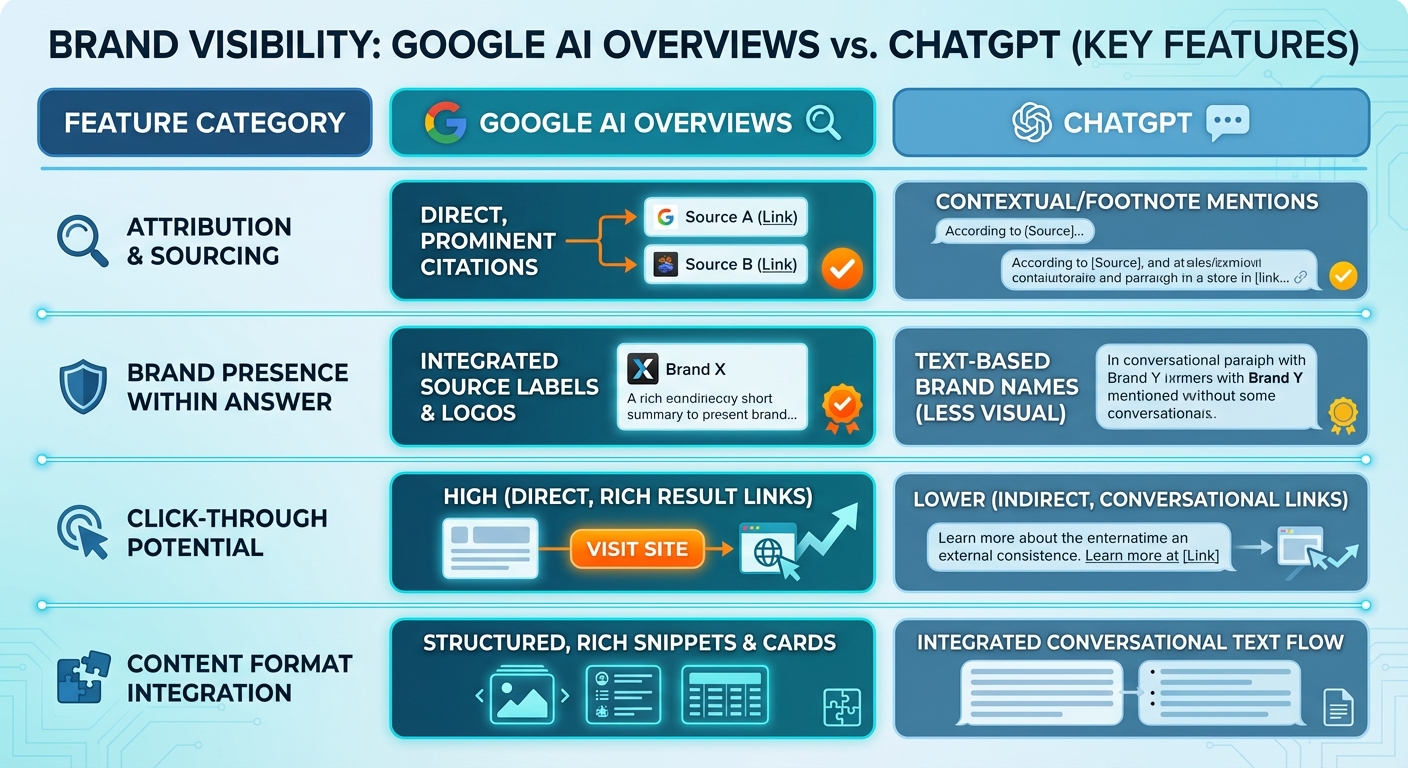
Benchmarking AI Visibility Tools
In today's rapidly evolving AI landscape, Google AI, ChatGPT, Perplexity, and Bing each offer distinct approaches to source attribution that can significantly impact a marketer's strategy. Google AI leads with robust citation practices, ensuring that marketers can trace information back to credible sources, a crucial feature for maintaining authority and trust [brightedge.com]. In contrast, ChatGPT functions more like a brand recommender, offering limited sourcing information but providing broader context in its responses [usebear.ai]. This divergence highlights the necessity for marketers to adapt their strategies based on the platform used, ensuring that visibility efforts align with the strengths of each tool.
Real-time monitoring capabilities also vary significantly across these platforms. Google AI's focus on authority and structure provides marketers with a stable and transparent framework to track brand visibility [imageworkscreative.com]. Perplexity offers a unique proposition by incorporating real-time data adjustments, allowing marketers to respond swiftly to changes in visibility trends [geneo.app]. Bing, while competitive, often blends AI-driven insights with its traditional search results, offering a hybrid model of visibility tracking that caters to different marketing needs. For instance, research shows that AI recommendations vary by 62% between ChatGPT and Google AI, emphasizing the importance of selecting the right tool for specific marketing objectives [searchenginejournal.com].
Finally, understanding the distinct features of these platforms can optimize brand strategies. With many brands struggling to appear in AI recommendations, GenRankEngine provides valuable insights on competitor recommendations across ChatGPT, Perplexity, and others, offering a strategic advantage [genrankengine.com]. 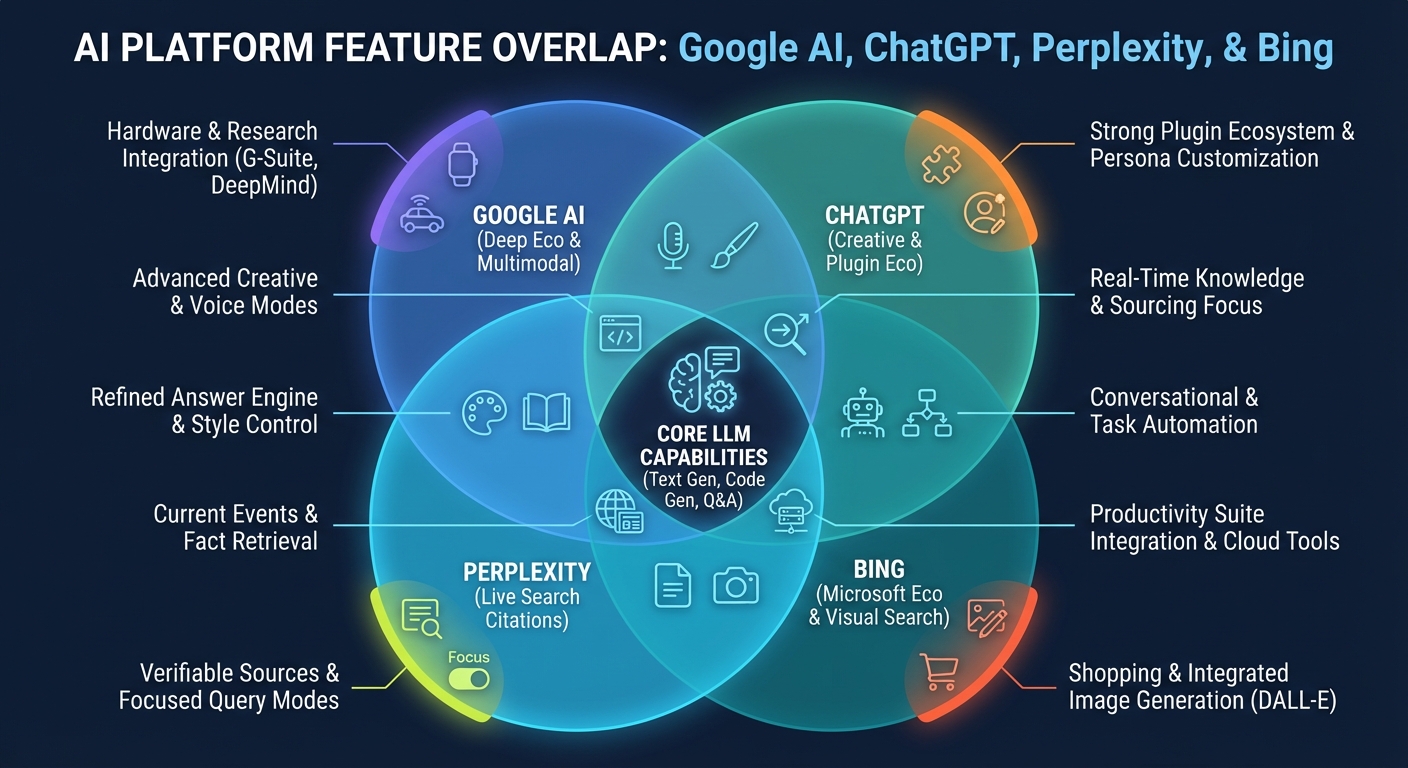 By analyzing these differences, marketers can tailor their content to maximize visibility and leverage the unique capabilities of each AI tool.
Methodology: Tracking AI Visibility
BrightEdge’s AI visibility tracking tools provide a robust framework for analyzing trends across multiple AI platforms. These tools reveal that Google AI Overviews, AI Mode, and ChatGPT recommend different brands nearly 62% of the time, underscoring the importance of platform-specific strategies [searchenginejournal.com]. Utilizing BrightEdge, we conducted a comparative analysis of visibility trends across platforms like ChatGPT, Google AI Mode, and newer entrants. This analysis demonstrated significant differences in how each platform highlights brand visibility, with ChatGPT often recommending brands with minimal sourcing, while Google AI Overviews emphasize citation and coverage [brightedge.com].
The methodology involved real-time monitoring of AI search visibility using a mix of quantitative and qualitative measures. Tools from sources like GenRankEngine allowed us to identify competitor brands that AI models recommend over others, providing actionable insights into market positioning [genrankengine.com]. For instance, the disparity in content length - where ChatGPT responses average 1,686 characters compared to Google’s 997 - affects how brands are perceived [usebear.ai].
To ensure comprehensive tracking, we cross-referenced the visibility data with SEMrush's insights, which compared AI Mode's performance to traditional search engines and other LLM-powered options [semrush.com]. This comparative approach highlights that AI visibility is not stable and varies greatly across platforms, necessitating continuous monitoring and adaptation [linkedin.com]. The methodology’s strength lies in its ability to adapt to these dynamic trends, equipping brands with the necessary tools to enhance their AI-driven visibility throughout 2026.
Key Takeaways for B2B SaaS Founders
Maximize your B2B SaaS brand's visibility by leveraging Google AI for its authoritative content capabilities. Google's AI Overviews prioritize structured, credible information, offering your brand a significant opportunity to stand out by focusing on authoritative content creation [imageworkscreative.com]. For example, detailed guides or expert analyses can be featured in Google AI Overviews, driving visibility and trust. According to GenRankEngine, positioning your content to align with Google's structured approach can significantly enhance your brand's presence [genrankengine.com].
Utilize ChatGPT as a powerful tool for brand recommendation and engagement. Unlike Google, ChatGPT functions more like a brand recommender, providing extended responses that can elevate your brand's narrative and customer engagement [brightedge.com] [usebear.ai]. With ChatGPT generating responses averaging 1,686 characters compared to Google AI's 997, there's ample space to craft persuasive, detailed brand stories that engage users [usebear.ai]. Furthermore, ChatGPT's unique brand recommendation patterns show a 62% variance from Google AI, highlighting the importance of tailoring your strategy across platforms [searchenginejournal.com].
Embrace a multi-model visibility strategy, as AI brand visibility is not uniform across platforms [linkedin.com]. Identifying which AI models recommend your competitors can offer insights to refine your approach. GenRankEngine provides tools for a comparative analysis across ChatGPT, Perplexity, and other platforms to help you understand and optimize your brand's AI presence [genrankengine.com]. Keep monitoring these trends and adjusting your content strategy to maintain and enhance your visibility across evolving AI landscapes.
Frequently Asked Questions
How do Google AI Overviews differ from ChatGPT recommendations?
Google AI Overviews prioritize citation and authority, providing structured information, while ChatGPT acts more like a brand recommender with minimal sourcing [brightedge.com].
What are the key benefits of using AI for brand visibility?
AI enhances brand visibility by recommending brands differently across platforms like Google AI Overviews and ChatGPT, which can increase exposure and reach [searchenginejournal.com]. It also allows for real-time monitoring and strategic adjustments to improve presence across various AI models [geneo.app].
How can I improve my brand's visibility in AI search results?
To improve your brand's visibility in AI search results, focus on establishing authority and structured content that aligns with Google AI's preferences, and ensure your brand is frequently mentioned and cited by credible sources to enhance visibility across platforms like ChatGPT [imageworkscreative.com].
Why is AI visibility important for B2B SaaS companies?
AI visibility is crucial for B2B SaaS companies because AI-driven search engines like ChatGPT and Google AI Mode recommend different brands frequently, affecting brand discovery and customer acquisition [searchenginejournal.com].
What tools are best for tracking AI visibility trends?
The best tools for tracking AI visibility trends include platforms like BrightEdge and tools that compare AI search engines such as Perplexity, Google AI Overviews, ChatGPT, You.com, and Bing [geneo.app]. These tools offer insights into brand visibility, source attribution, and real-time monitoring.
Key Takeaways
- Acknowledge the significant 62% variance in brand recommendations between Google AI Overviews and ChatGPT, and adjust your marketing strategies accordingly to target each platform effectively.
- Develop content that emphasizes authority and structured citations to optimize for Google AI Overviews, which prioritizes these elements in its algorithm.
- Craft longer, narrative-driven content to align with ChatGPT's style, which favors brand recommendations based on detailed mentions and credible sources.
- Analyze and leverage GenRankEngine's methodologies to enhance your brand's visibility on Google AI Overviews, ensuring a competitive edge in AI-driven search results.
- Continuously monitor AI visibility trends and adapt your strategies to navigate the dynamic landscape of AI-driven brand recommendations, as traditional SEO no longer encompasses full brand presence.
- Utilize insights from GenRankEngine's analysis to identify and counter competitors being recommended by AI models, securing your brand's position in AI-generated results.
Sources
- semrush.com - In this study, we set out to understand how AI Mode compares to traditional Goog
- brightedge.com - ChatGPT operates like a brand recommender with minimal sourcing, while Google po
- visible.seranking.com - Learn how to choose the best AI search visibility tools to keep track of your pr
- linkedin.com - Your brand visibility in AI is not stable. And it is not the same across models.
- searchenginejournal.com - New research from BrightEdge shows that Google AI Overviews, AI Mode, and ChatGP
- usebear.ai - Content Visibility Differences ChatGPT, in contrast, generates longer response
- geneo.app - Compare Perplexity, Google AI Overviews, ChatGPT, You.com, and Bing for brand vi
- imageworkscreative.com - 1. Google AI Focuses on Authority and Structure · 2. ChatGPT Highlights Mentions
- genrankengine.com - A step-by-step methodology for getting your content featured in Google AI Overvi
- genrankengine.com - A transparent case study documenting why new brands struggle to appear in AI rec
- genrankengine.com - Identify which competitors AI models recommend instead of your brand. Free scan
See How AI Models Interpret Your Brand
Run a free scan across Perplexity, ChatGPT, Gemini, and Google AI Overviews. No signup required.
Run Free AI Visibility Scan →